
Fire Safety eLearning Course
Articulate Storyline
Audience: New and current employees
Responsibilities: Script writing, storyboarding, visual design, development
Problem Solved: Hands-on Fire Extinguisher Training equips employees with the confidence and skills to respond quickly in critical first moments of a fire, covering extinguisher types, the PASS technique, and real decision-making on when to fight a fire versus when to evacuate. Interactive and Practical, this session turns nervous bystanders into capable first responders.
Tools: Articulate Storyline, Figma, Canva for Images
Timeline: April 2026 - June 2026
Instructional Strategies: Gagne’s Nine Events of Instruction, ARCS Motivation Simulation, Click and Reveal Question, Exercises, and Click and Reveal
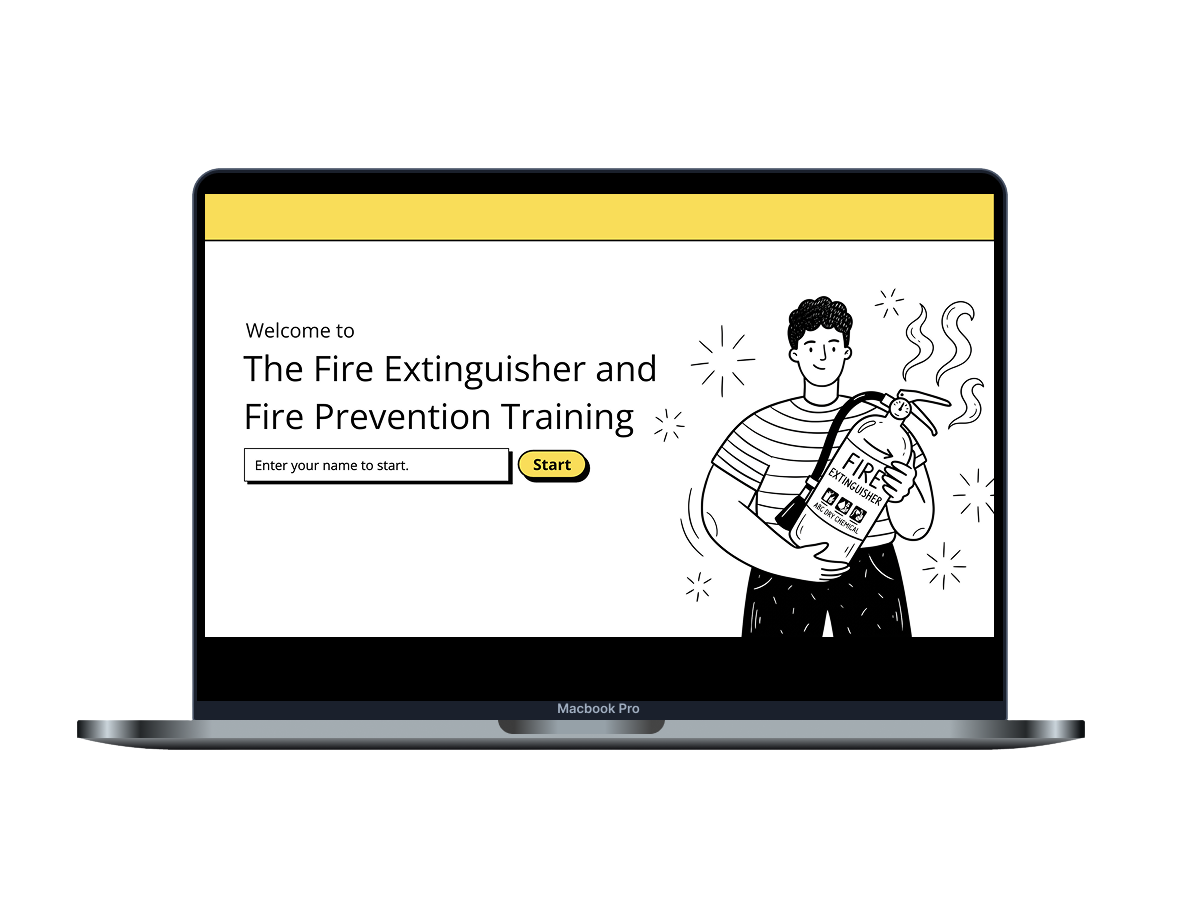
Overview
1. Analysis & Instructional Framework: Structured the curriculum around Gagné’s Nine Events of Instruction to scaffold skill acquisition and integrated Keller’s ARCS Model to maintain learner engagement and build confidence under pressure.
2. Storyboarding & Scripting: Authored clear, action-oriented dialogue, branching scenario decision points, and practical remediation scripts tailored to real-world workplace risks.
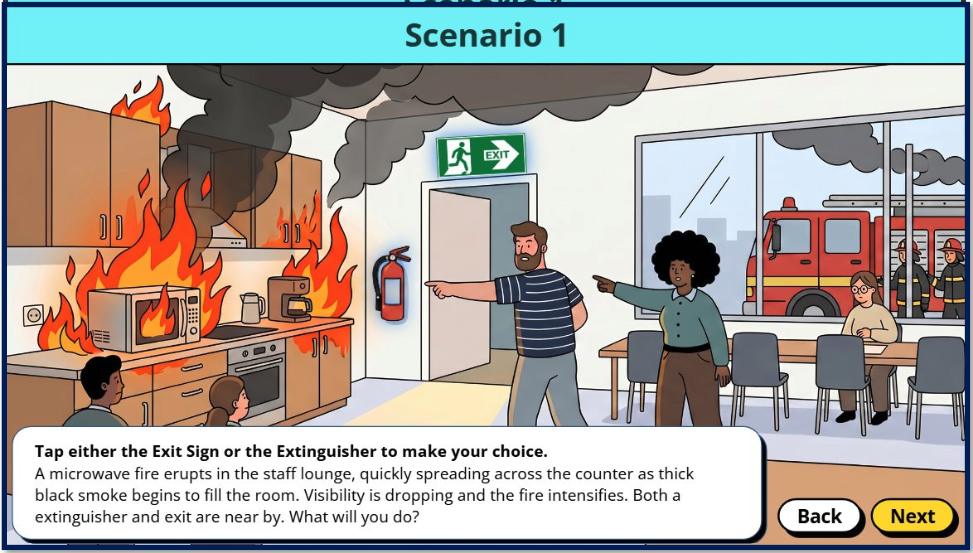
3. Visual Asset Production: Generated custom, high-fidelity visual assets and environments using Generative AI tools to illustrate authentic emergency contexts and extinguisher types.
4. Interactive Prototyping & Build: Developed the module in Articulate Storyline, engineering interactive simulations, click-and-reveal knowledge checks, guided practice exercises, and custom feedback variables.
5. Quality Assurance & Evaluation: Conducted usability testing and alignment reviews to ensure seamless navigation, accessible interactions, and measurable retention of the PASS framework.
Process
There was a need for an interactive asynchronous Fire Safety eLearning course designed to educate employees on fire prevention, emergency procedures, evacuation protocols, and proper use of fire extinguishers. My task was to design and develop an effective training course that increased awareness of fire safety practices reinforced key concepts and assess understanding.
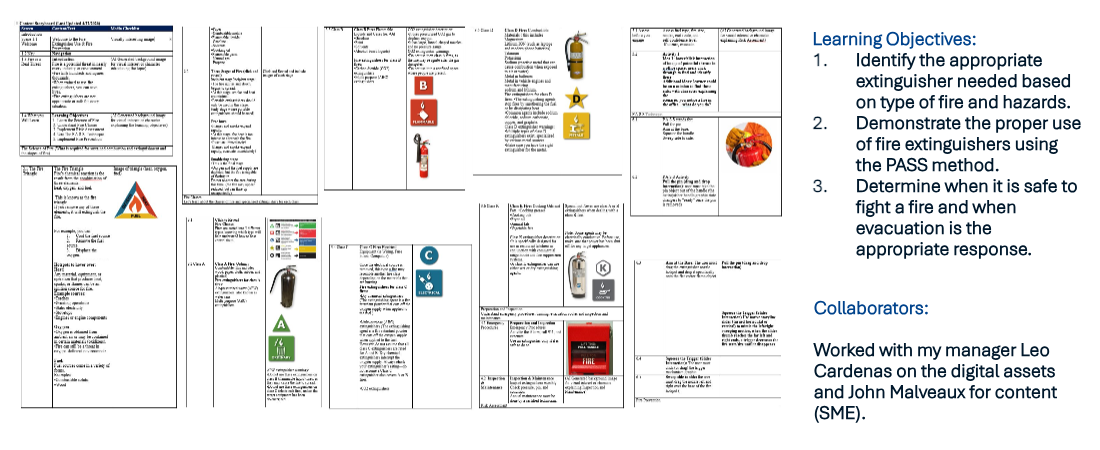
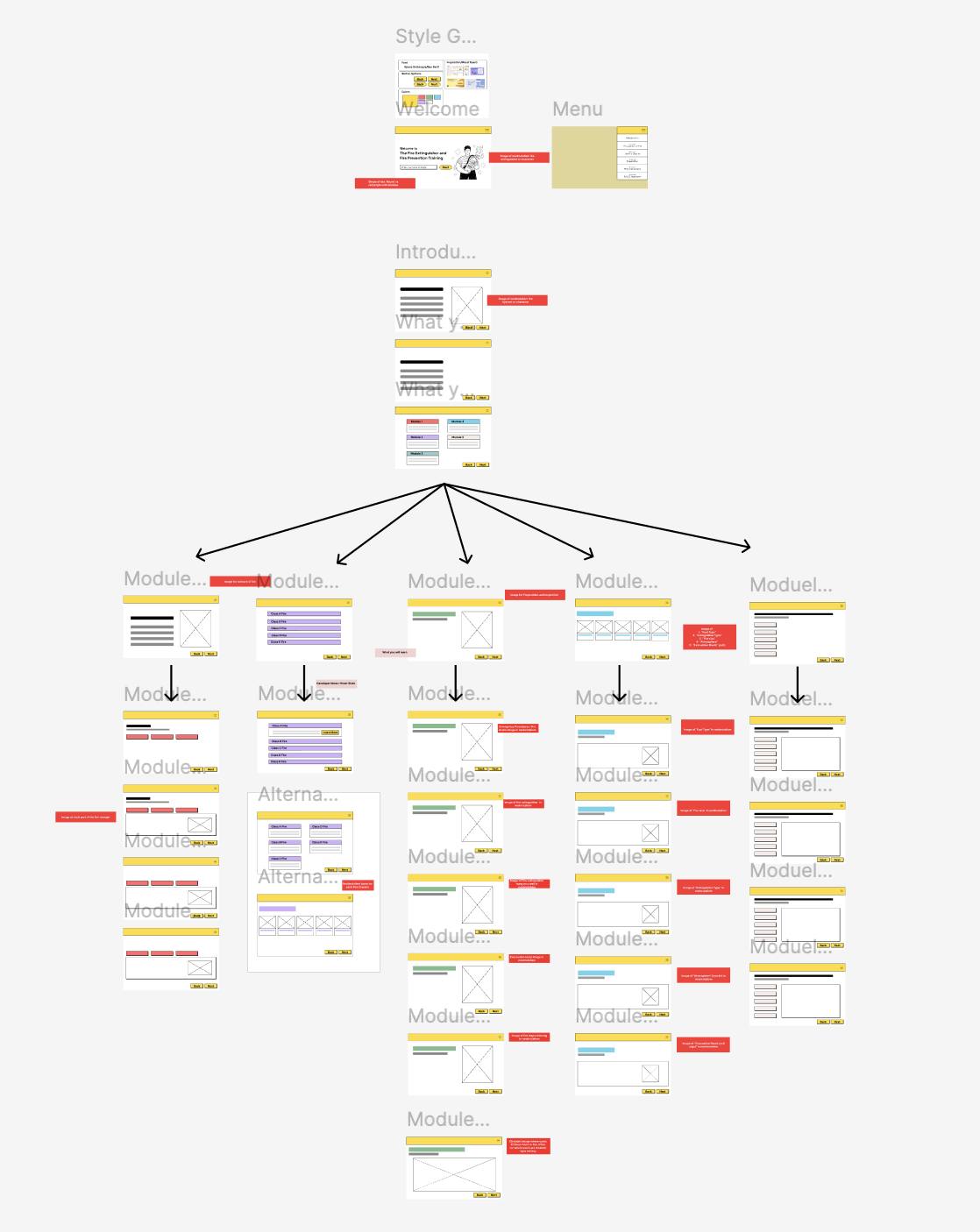
After analyzing the course requirements and connecting with the Subject Matter Expert (John Malveaux), I storyboarded, planned, and built out an interactive and immersive learning experience using scenarios, knowledge checks, click-and-reveal activities to engage learners using best practices of Adult Learning Theory (ie. Motivation).After meeting with the Subject Matter After drafting the design document with the storyboard, I created my wireframes on Figma to organize the slides and place the content from the storyboard
Design Style
Meeting the SME’s Vision: During initial discovery, the Subject Matter Expert (SME) was explicit: they wanted to steer clear of conventional, safe "corporate blues and grays" and build something visually dynamic and memorable that genuinely commands learner attention.
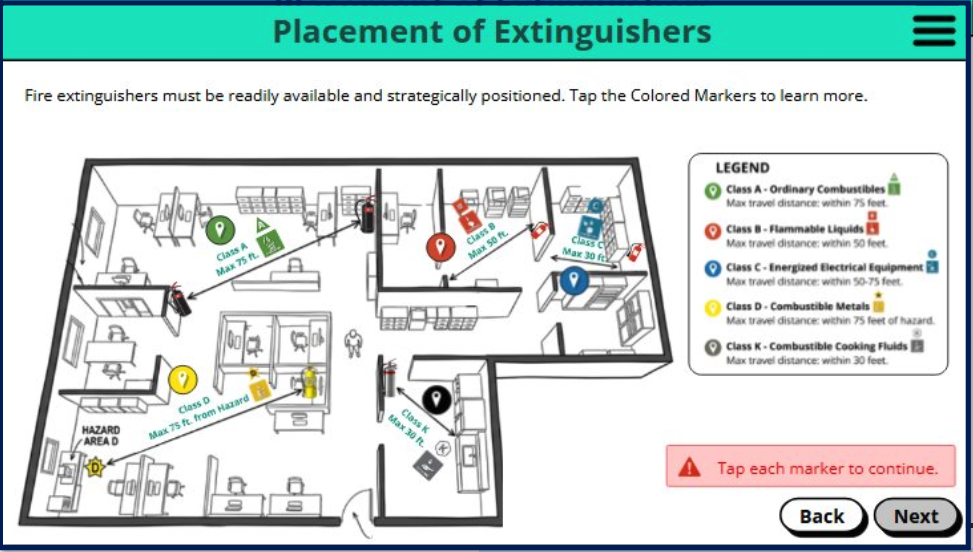
Unambiguous Tactile Affordance: The module requires fast decision-making and frequent learner interaction. Neobrutalism’s thick borders and physical, "sticker-like" hard drop shadows make buttons, hot-spots, and clickable cards feel tactile and pressable—removing any cognitive guesswork about where to interact.
Sharp Scannability & Hierarchy: Using a stark, high-contrast base punctuated by electric accent solids allows content containers to feel distinct. Learners can instantly differentiate scenario prompts from actionable controls.
Balancing Playfulness with Clean Function: It delivers an energetic, modern edge without compromising usability or accessibility standards, creating an engaging learning environment that feels intentional rather than routine.
Storyline Features Implemented
To deliver an engaging and responsive learning experience, the module leverages advanced Articulate Storyline features to drive active participation and immediate reinforcement. Interactive branching scenarios place learners directly into authentic emergency decision points, supported by click-and-reveal activities that break down complex procedural steps like the PASS technique into digestible interactions. Custom variables track learner pathways and performance across slides, while dynamic button states—including hover, selected, and visited—provide clear, tactile navigation cues that align with the course's Neobrutalist design system. At the conclusion of each section, end-of-module knowledge checks utilize dedicated slide layers to trigger instant, contextual feedback pop-ups, ensuring learners immediately understand the rationale behind correct actions and remediation steps before moving forward.
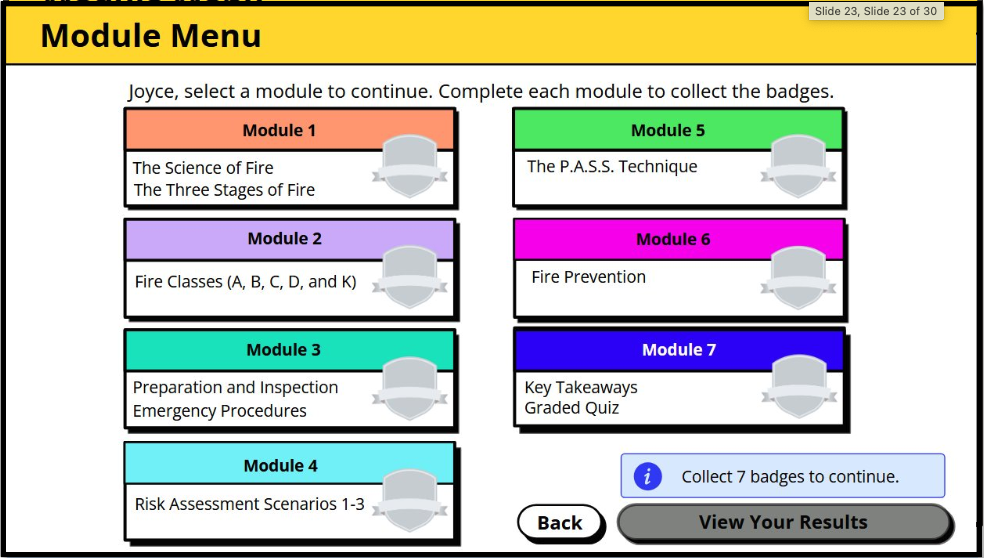
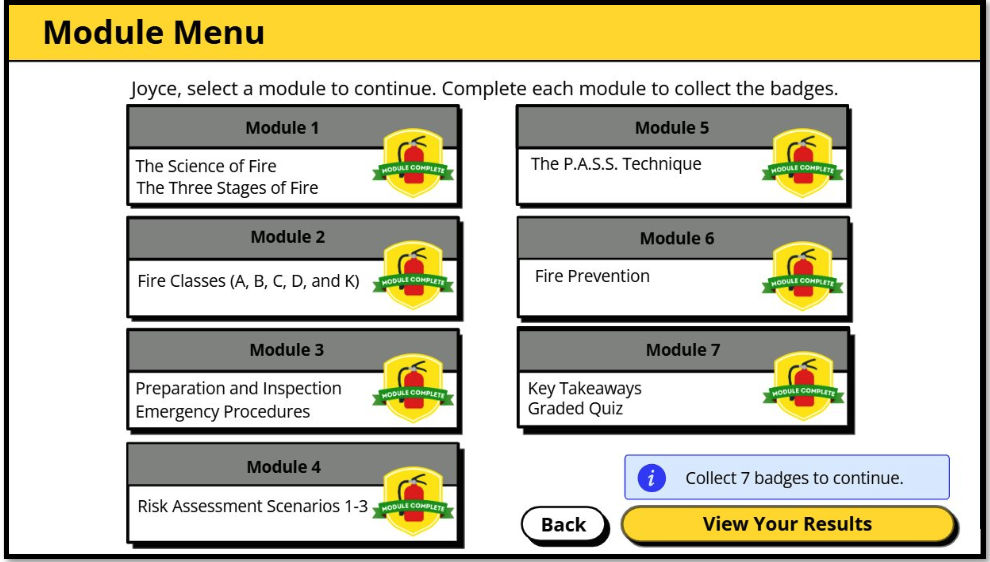
Once the learner made it through each module, they recieved a badge that indicates completion; the locked states of the buttons guide the learner through elements they must interact with first before progressing through the traiing. Once all badges are collected, the learn may move forward.
Knowledge Checks
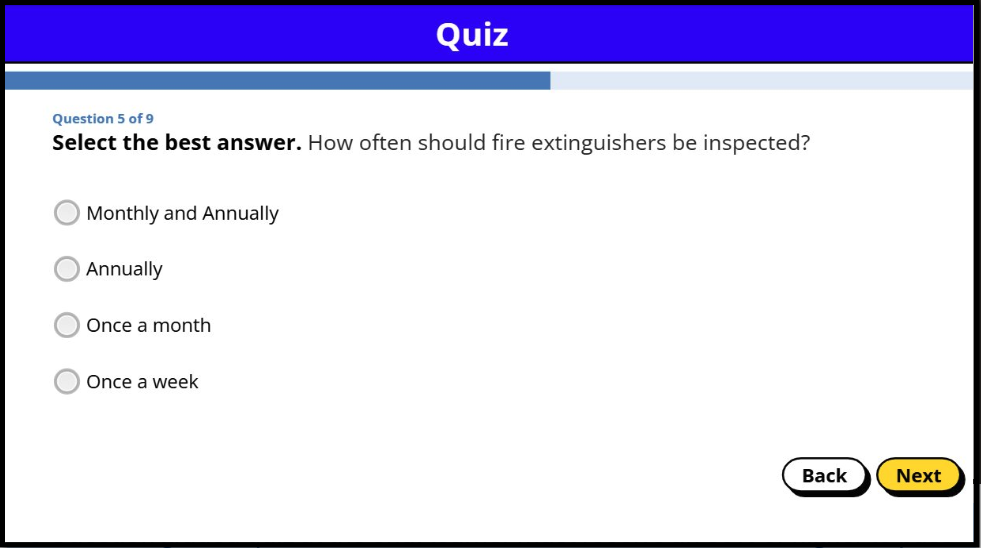
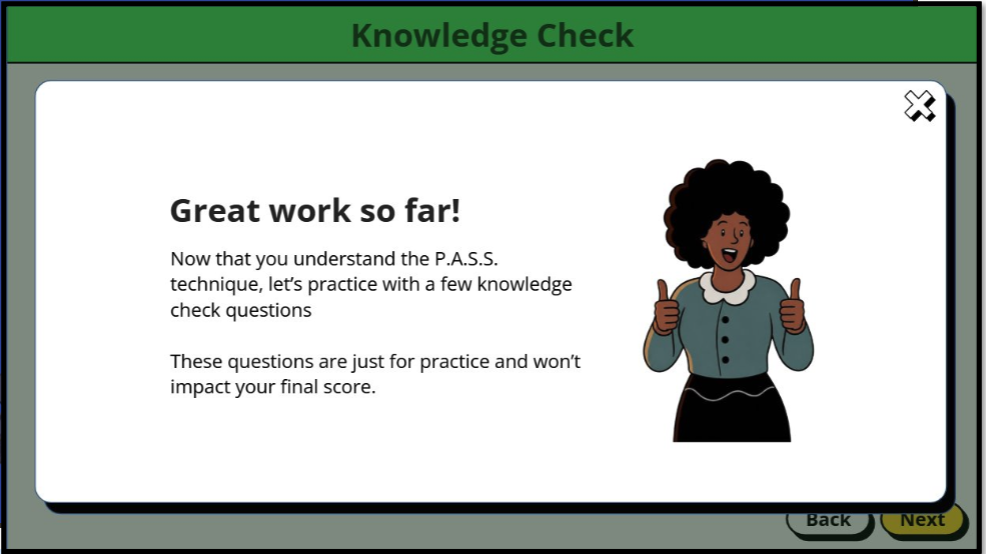
To deliver an engaging and responsive learning experience, the module leverages advanced Articulate Storyline features to drive active participation and immediate reinforcement. Interactive branching scenarios place learners directly into authentic emergency decision points, supported by click-and-reveal activities that break down complex procedures like the PASS technique. Dynamic button states provide clear tactile cues, while custom variables track learner choices throughout the course. At the end of each section, formative 1–3 question knowledge checks use dedicated slide layers to deliver instant, contextual feedback pop-ups for low-stakes practice before learners advance. This cumulative scaffolding prepares learners for the final graded assessment, which requires an 80% passing score to ensure mastery and certify emergency preparedness.
Takeaways
This project reinforced that safety training achieves real impact when passive compliance is replaced with active, scenario-based practice and deliberate visual affordances. Grounding the module in Gagné’s Nine Events allowed complex emergency procedures—like the PASS technique and critical evacuation assessments—to be scaffolded without cognitive overload, while the bold Neobrutalist design system proved that striking, non-traditional aesthetics can directly enhance UI scannability and tactile interaction. Ultimately, close SME collaboration and prompt-engineered visual assets made it possible to deliver a consistent, highly engaging simulation that builds authentic learner confidence under pressure.